It was the Sunday before Thanksgiving, and the in-laws were due at noon. I went out at seven to move my pickup so they’d have the driveway. It cranked strong, the way it always does, but it never caught. Ten seconds, twenty seconds, nothing. Just that steady “rrr-rrr-rrr” that every driveway mechanic learns to dread.
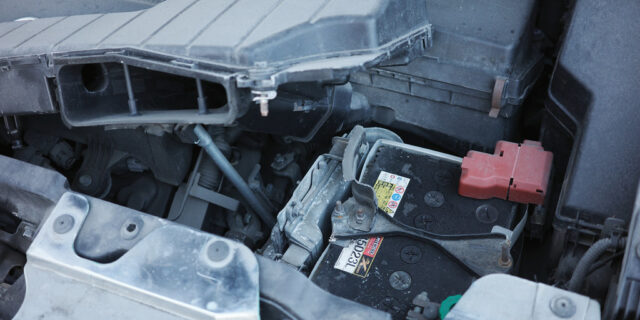
The battery was fine, which actually made me feel better. A car that cranks hard but won’t fire is missing one of three things: fuel, spark or air. Sometimes a fourth, compression, but that’s rarer. I’ll walk through the checks in the order I do them, cheapest and most likely first. Mine turned out to be a fuel pump relay, and the in-laws never knew.
Shop notes
- symptom: cranks normally, no hum from the tank at key-on. Likely cause: fuel pump, fuel pump relay, fuse or inertia switch.
- symptom: cranks, security light flashing. Likely cause: immobilizer not recognizing the key.
- symptom: cranks, strong fuel smell, won’t catch. Likely cause: flooded engine or ignition problem.
- symptom: cranks faster than usual with no normal rhythm. Likely cause: timing belt or chain problem. Stop cranking.
Step 1: Rule Out the Simple Stuff
Before you open the hood, check the things that cost nothing. I’ve been embarrassed by every one of these at least once.
- Fuel gauge: is there really gas in the tank? Gauges and sending units fail. If you’re near empty, add a couple of gallons and try again.
- Security light: watch the dash for a flashing key or lock symbol. An immobilizer that doesn’t recognize the key will let the engine crank but cut fuel or spark.
- Spare key: try it. A weak key chip or a damaged key can cause a crank-no-start.
- Check engine light: it should come on with the key in run, then go out after start. If it never lights up at all, the engine computer may not be powered.
- Recent events: did you just fill up, run it nearly dry, hit a big pothole, or have work done? Each points somewhere.
Some vehicles have an inertia switch that shuts off the fuel pump after a hard jolt. It’s usually in the trunk, kick panel or passenger footwell. Your owner’s manual will say if you have one and how to reset it.
Step 2: Read the Codes and Watch the Crank
Plug in a code reader even if the check engine light isn’t on. Codes for crankshaft or camshaft position sensors are especially useful here. The engine computer needs a crank signal to fire the injectors and coils.
Useful things to look for
- Crank or cam sensor codes: a failed crank sensor is a common cause of crank-no-start on many engines.
- Fuel pump circuit codes: point to wiring, relay or pump.
- Communication codes: can mean a module isn’t talking. Sometimes that’s a fuse.
- Immobilizer or anti-theft codes: confirm a key or security problem.
If your scanner shows live data, watch engine RPM while someone cranks. You should see a small RPM number, often a couple hundred. If it reads zero while the engine clearly turns, the computer isn’t seeing the crank sensor signal. That’s a strong clue.
Listen to the crank itself
Normal cranking has a rhythm. Each cylinder’s compression stroke slows the starter a little, so you hear an even “rrr-rrr-rrr.” If it suddenly cranks fast and smooth with no rhythm, compression may be missing. On engines with a timing belt or chain, that can mean it jumped or broke. Stop cranking and have it checked. More cranking won’t help and can make things worse on some engines.
Step 3: Check for Fuel
Fuel problems are among the most common reasons a healthy engine won’t fire. The checks start easy.
Listen for the pump
Turn the key to run without cranking. On most fuel-injected vehicles, the pump runs for a couple of seconds to build pressure. In a quiet garage, you’ll hear a faint hum from the rear of the car. Have a helper listen near the fuel filler or under the rear seat area.
- Hum present: the pump is at least running. It still might not make enough pressure.
- No hum: check the fuel pump fuse and relay first. Then the inertia switch if equipped.
Fuse and relay
Find the fuel pump fuse and relay using the fuse box lid or owner’s manual. Check the fuse with a test light or by looking at the element. Swap the relay with an identical one from a less important circuit, like the horn. If the pump suddenly hums, you’ve found your problem. That’s exactly what happened to my pickup that Sunday.
Fuel pressure
Many port-injected engines have a test port on the fuel rail with a valve like a tire valve. A fuel pressure gauge screws on there. Some parts stores loan these gauges out. Compare the reading to the spec for your exact engine.
Direct-injection engines run much higher pressure on the rail side. Don’t connect a regular gauge to the high-pressure side. Leave that testing to a shop.
If you smell fuel strongly, see a leak, or the pressure drops right away after key-off, stop. Fuel leaks are a fire hazard. Get professional help.
Step 4: Check for Spark
If fuel looks good, the next suspect is ignition. Modern engines usually have a coil on each plug or a coil pack. When everything fails at once, look for a shared cause.
Common shared causes
- A blown ignition or coil fuse.
- A failed crankshaft position sensor, which stops both spark and fuel on many engines.
- A main relay or engine computer power problem.
- Water in coil wells or distributor cap after a heavy wash or flood, on some engines.
Testing spark safely
An inline spark tester is the safest way to check. It goes between the coil and the plug, and it flashes when spark is present. It’s inexpensive and keeps your hands away from high voltage.
- Disconnect the fuel injectors or pull the fuel pump fuse first if your service info recommends it. This keeps the engine from loading up with fuel.
- Install the tester on one cylinder.
- Have a helper crank while you watch from a safe distance.
- Check a second cylinder to confirm.
Don’t hold a spark plug wire near metal by hand to “see a spark.” Ignition systems put out high voltage that can hurt you and can damage modules.
If one cylinder sparks and the others don’t, look at those individual coils and plugs. If none spark, go back to the shared causes above.
Step 5: Check Air and a Flooded Engine
Air problems that stop an engine from starting are less common, but they happen.
- Air filter: a filter packed with debris or a rodent nest can choke an engine. Take a look; it’s two clips on most cars.
- Intake ducts: a disconnected or split duct after the mass airflow sensor lets unmeasured air in. The engine may start and die, or not start at all.
- Throttle body: heavy carbon can make some engines hard to start, mostly with a high or hunting idle afterward.
Flooded engine
If you smell a lot of fuel after cranking, the engine may be flooded. Many fuel-injected vehicles have a “clear flood” mode. You hold the accelerator to the floor while cranking, and the computer cuts fuel. Check your owner’s manual before trying it, since not every vehicle supports it.
Give the starter a rest between tries. Cranking in short bursts with a pause of about half a minute or more protects the starter from overheating. Check your owner’s manual, as some vehicles list specific limits.
Step 6: Consider Timing and Compression
If you have fuel and spark and still no start, the engine may not be making compression, or the spark and fuel timing may be off.
- Timing belt: engines with a belt have a replacement interval in the owner’s manual. If yours is overdue and it suddenly cranks fast with no rhythm, the belt is a prime suspect.
- Timing chain: chains last longer but can stretch. Cam and crank correlation codes are often the first warning.
- Compression test: a gauge screwed into each plug hole shows whether cylinders build pressure. It’s a moderate job and needs care.
On interference engines, a broken belt can damage valves. Stop cranking and have a shop confirm before you spend money on anything else.
Listen before you buy parts. In my experience, crank-no-start fixes are often a relay, a fuse, a sensor or a key. It’s rarely the whole engine.
Related checklistCar Clicks but Won’t Start? Battery, Starter or Ground
Related checklistHow to Read Check Engine Codes With a Cheap OBD2 Scanner
Tow or go?
| What you notice | Likely cause | Verdict |
|---|---|---|
| Pump silent, starts after relay swap | Failed fuel pump relay | Go: replace the relay, keep a spare |
| Security light flashing, spare key works | Bad key chip or key battery | Soon: replace or reprogram the key |
| Cranks fast with no rhythm | Timing belt or chain failure | Stop: don’t keep cranking, tow it |
| Strong fuel smell or visible leak | Fuel line or injector leak | Stop: fire risk, get professional help |
When to hand it to a shop
- You smell fuel or see any leak.
- The engine cranks fast with no rhythm, which can mean timing failure.
- The immobilizer won’t recognize any key.
- Fuel pressure is low and the pump is inside the tank.
- You’ve confirmed fuel and spark and it still won’t fire.
FAQ
Can a bad battery cause crank-no-start?
Yes, sometimes. A battery that cranks slowly may not leave enough voltage for the computer, coils and injectors. If the cranking sounds sluggish, charge or test the battery before chasing other parts.
Will starting fluid tell me if it’s a fuel problem?
A short spray into the intake can show whether the engine fires with added fuel. It can also cause damage on some engines and is a fire risk. Many mechanics prefer a fuel pressure test instead. If you use it, follow the label carefully and never on diesels.
Why does it start after sitting a while?
Heat-related failures like a weak crank sensor or fuel pump can work again after cooling down. Note the pattern and tell your shop.
How long can I safely crank?
Keep tries short and rest the starter between them. Long cranking can overheat the starter and drain the battery.
Pit-Stop Summary
The 30-Second Version
- Check fuel level, the security light and your spare key.
- Read codes and watch for an RPM signal while cranking.
- Listen for the fuel pump hum, then check the fuse and relay.
- Test for spark with an inline tester.
- If it cranks fast with no rhythm, stop and get it towed.