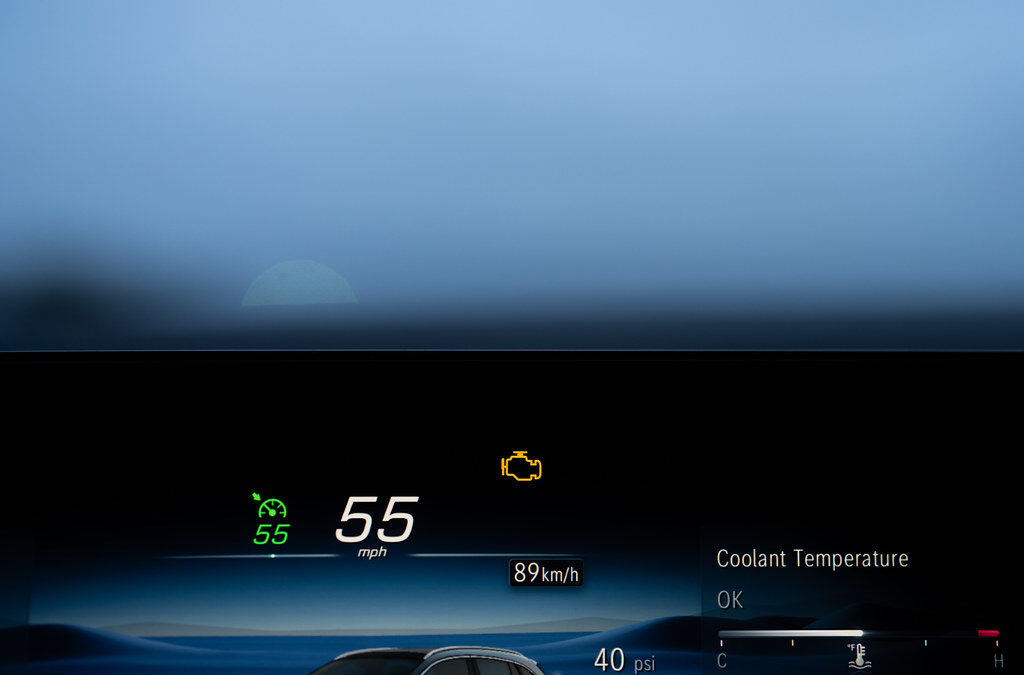
I learned the difference between a steady check engine light and a flashing one on a highway on-ramp, merging into traffic with a pickup that suddenly felt like it was running on five cylinders out of six. The light started blinking, the truck started bucking, and I did what a lot of people do: I kept going, figuring I’d deal with it at home.
That was a mistake that could have cost me a catalytic converter. A steady light is a “get it checked” message. A flashing light is the car telling you something is actively going wrong right now. Here’s what to do, in order.
Shop notes
- Flashing light: almost always an active, severe misfire. Reduce load and pull over when safe.
- Steady light: a fault was stored. Get the code read soon, but it’s usually not an emergency.
- Light flashes only under hard acceleration: still a misfire, just one that shows up under load.
- Fuel smell, smoke or overheating with the flashing light: stop and shut the engine off.
Why a flashing light is different
On most cars, the engine computer flashes the check engine light when it detects a misfire bad enough to damage the catalytic converter. When a cylinder misfires, unburned fuel goes straight into the exhaust. Inside the converter, that fuel burns and can push temperatures high enough to melt the converter’s internal honeycomb.
A replacement converter can cost far more than whatever caused the misfire in the first place. That’s why the right move is to reduce the load on the engine quickly, not to keep driving to your destination.
Step 1: What to do in the first five minutes
- Ease off the throttle. Avoid hard acceleration, climbing steep hills and towing. Less load means less misfiring.
- Pull over when it’s safe. Get completely off the road, turn on your hazards and put the car in park.
- Use your senses. Do you smell raw fuel? See smoke? Is the temperature gauge climbing? If so, shut the engine off and don’t restart it. Call for a tow.
- Check the basics. With the engine off, look at the temperature gauge and any other warning lights. A flashing check engine light together with an oil pressure or overheating warning is a stop-now situation.
If none of those red flags are present, some drivers restart the car and find the light has gone steady or off. That doesn’t mean the problem is fixed; misfires can come and go. If you must move the car, drive slowly and gently, a short distance, and keep an eye on the light. If it starts flashing again, stop.
Step 2: Read the codes
The fastest way to stop guessing is to read the stored trouble codes. An inexpensive OBD2 scanner plugs into the port under the dashboard, usually near the driver’s knees, and shows the codes on its screen or on your phone. Many auto parts stores will also read codes for free.
For a flashing light, you’ll usually see one of these:
- P0300: random or multiple-cylinder misfire. The computer sees misfires but can’t pin them to one cylinder.
- P0301 through P0308: misfire in a specific cylinder. P0301 is cylinder 1, P0302 cylinder 2, and so on.
- Related codes: lean codes such as P0171 or P0174, or ignition coil circuit codes, can point to the cause behind the misfire.
Write down every code, not just the first one. They often tell a story together.
Step 3: Narrow down the cause
A misfire happens when a cylinder doesn’t get the right mix of spark, fuel and compression. These are the most common causes, roughly in the order I check them.
Ignition coil or spark plug
On many modern engines, each cylinder has its own coil sitting on top of the spark plug. A cracked coil or a worn-out plug is the single most common cause of a single-cylinder misfire. If you get a code like P0303, a classic home test is to swap the coil from cylinder 3 with a neighboring cylinder, clear the codes and drive. If the misfire moves to the new cylinder, the coil is bad. If it stays put, look at the spark plug or the injector next.
When you pull a plug, look at it. Heavy oil fouling, a cracked insulator or a badly worn electrode all point to the culprit, and plugs that are well past their service interval are worth replacing as a set.
Fuel injector
A clogged or failing injector can starve one cylinder of fuel. If a coil swap and a fresh plug don’t move or fix the misfire, the injector is a common next suspect. Testing injectors properly usually takes more equipment, so this is often a good point to bring in a shop.
Vacuum leak
A cracked vacuum hose or a leaking intake gasket lets in extra air the engine didn’t account for. That leans out the mixture and can cause misfires, especially at idle. Listen for a hiss around the engine with it running, and look for cracked, brittle or disconnected rubber hoses. Lean codes alongside misfire codes are a strong hint.
Low compression or mechanical problems
If a cylinder has a burnt valve, a worn ring or a head gasket problem, it can’t build compression, and no amount of new parts on top will fix it. A compression test or leak-down test tells you. Signs include a persistent misfire on one cylinder that doesn’t respond to coil, plug or injector swaps, coolant loss, or white smoke from the exhaust.
Bad fuel or wet ignition parts
Less common but worth mentioning: a misfire that started right after filling up can be contaminated fuel. A misfire that only happens after heavy rain or a car wash can be moisture getting into a cracked coil or plug well.
Tow or go?
| What you notice | Likely cause | Verdict |
|---|---|---|
| Light flashed briefly, now steady, car drives normally | Intermittent misfire | Drive gently, read codes soon |
| Light keeps flashing, engine shakes under load | Active misfire, often coil or plug | Short, gentle trip only, or tow |
| Flashing light plus fuel smell, smoke or overheating | Severe misfire or other serious fault | Shut it off. Tow it. |
| Flashing light plus oil pressure warning | Possible internal engine problem | Shut it off. Tow it. |
What not to do
- Don’t just clear the code and drive on. Clearing codes erases useful information and does nothing to fix the misfire.
- Don’t pour in a bottle of additive and hope. Fuel system cleaners have their place, but they won’t fix a cracked coil or a vacuum leak.
- Don’t replace the catalytic converter first. If the misfire caused converter damage, a new converter will be ruined too unless the misfire is fixed first.
When to hand it to a shop
- The light flashes constantly or comes back right after a coil or plug swap.
- You have misfire codes plus coolant loss, white smoke or overheating.
- You smell fuel or see a leak.
- The misfire doesn’t follow the coil, and you don’t have tools to test injectors or compression.
FAQ
Can I drive with a flashing check engine light?
Only as far as you need to get somewhere safe, slowly and gently. Continued driving with an active misfire can overheat and damage the catalytic converter. If you smell fuel, see smoke or the engine is overheating, shut it off and get it towed.
Why does my check engine light flash and then go steady?
The computer flashes the light while a severe misfire is happening. When the misfire stops or drops below the damaging threshold, the light can go steady because the fault is still stored. The underlying problem usually still needs fixing.
Is a flashing check engine light always a misfire?
On most vehicles, yes. The flashing pattern is reserved for misfires severe enough to damage the catalytic converter. Read the codes to confirm, since some manufacturers use the light differently.
How much does it cost to fix a misfire?
It depends on the cause. A spark plug or ignition coil is usually an affordable repair, an injector costs more, and internal engine problems can be expensive. Finding the cause early, before it damages the catalytic converter, is what keeps the bill down.
Pit-Stop Summary
The 30-Second Version
- Flashing light means an active misfire. Ease off and pull over when safe.
- Fuel smell, smoke, overheating or an oil warning: shut it off and tow.
- Read the codes with an OBD2 scanner. Note every code.
- Single-cylinder code: swap the coil to see if the misfire follows it, then check the plug.
- Misfire won’t move or keeps coming back: let a shop test injectors and compression.